
|
|
|
|
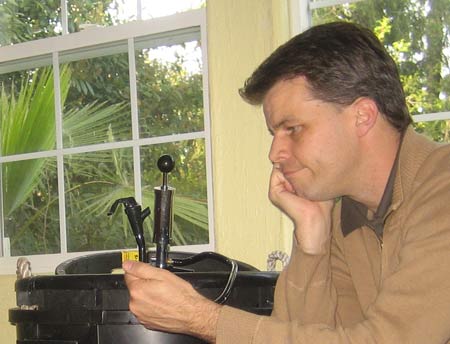
An empty keg is often the best indicator sign of a terrific party. |
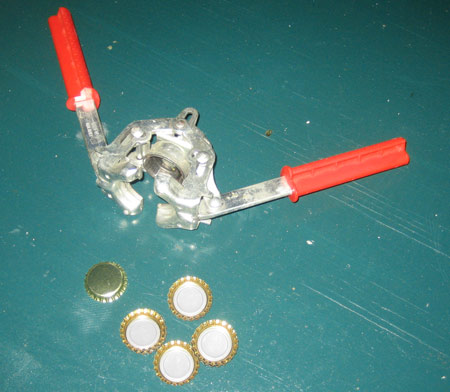
As luck would have it, Sue had just given me some beer-making supplies, including empty 22 oz. beer bottles, bottlecaps and a
bottlecapper. Could I re-package the beer, allowing it to live for another Saturday? |
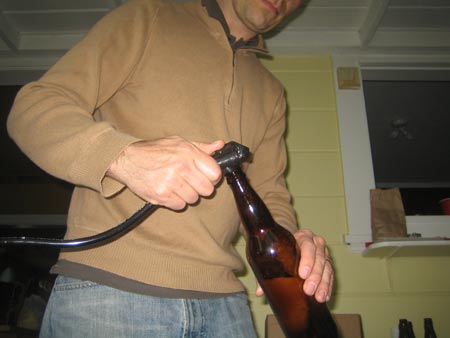 The first bottle had a huge amount of foam.
There was hope that subsequent bottles would have less, but the problem didn't clear up
through three more bottles. This was probably a temperature-related
phenomenon. The first bottle had a huge amount of foam.
There was hope that subsequent bottles would have less, but the problem didn't clear up
through three more bottles. This was probably a temperature-related
phenomenon. The foam would eventually die down, but it took forever.
|
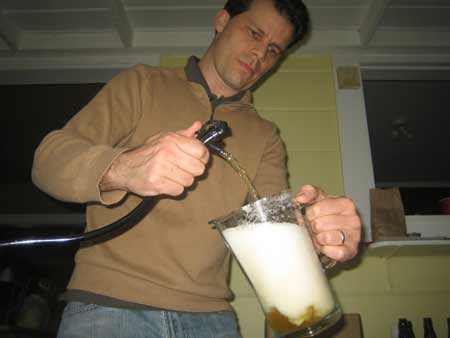
In an effort to diffuse the foam before the beer went into the bottles, I tried decanting the beer into a pitcher first. If I had been trying to obtain as much beer foam as possible. This would have been considered a total success.
|
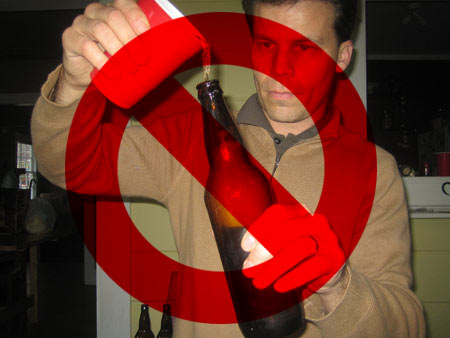
Bottling the leftover beer from within the keg was innovative, but I don't recommend extending this reclamation attempt to the orphaned cups of beer from the party. |
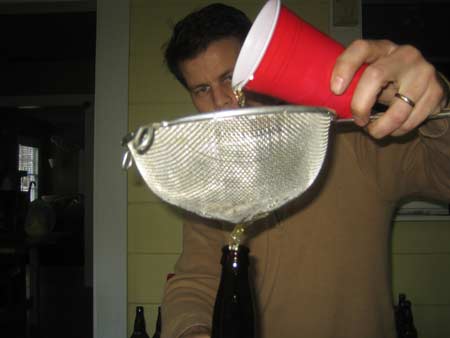
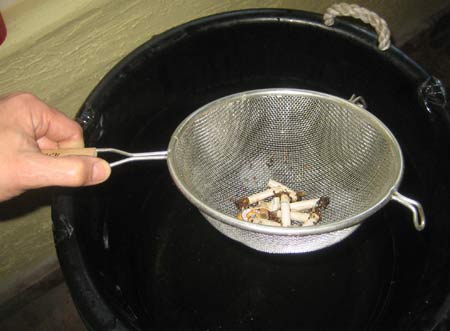
Unless you use a strainer to catch food particles, cigarette butts, and gum. |
|
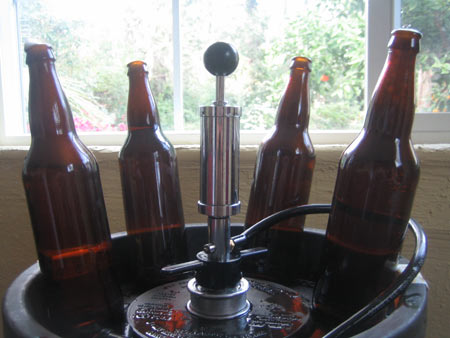
I had filled 13 bottles of beer when the keg gave its last wheeze. It hadn't been half-full after all! |
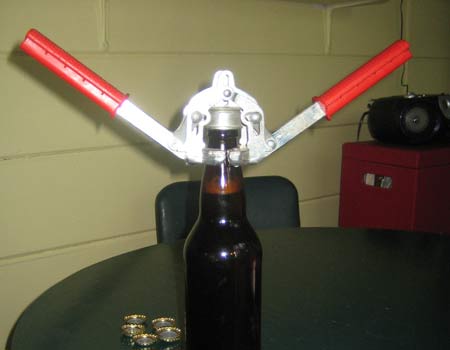
The two-handed bottlecapper was a snap to use. I pressed new bottlecaps onto my bottles. |
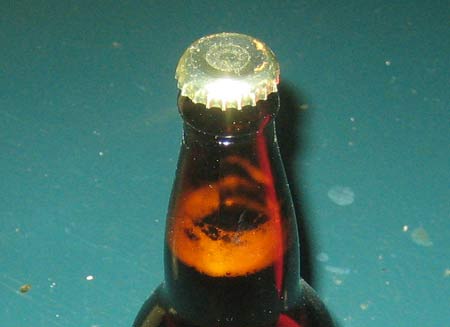
Good as new, and airtight! |
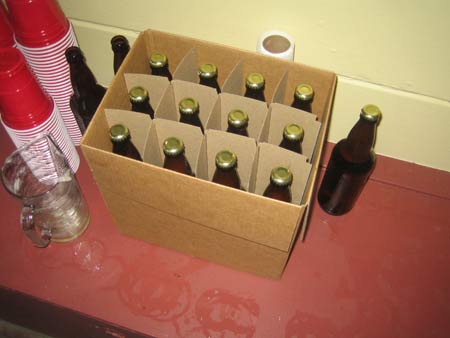
Leftover beer anyone? The keg was empty and ready to be returned to the store. I had rescued13 bottles of beer. Does that make me a hero? Not any more of a hero than that guy that saved that kid on the subway tracks in New York City, but probably his equal. Two gallons of beer from a keg of beer is only worth about $12. But by bottling it, I was looking at a value-added bounty of at least $30 worth of beer! Maybe I could start my own party-over bottling company, visiting less-than-raging parties and recycling their dregs into cases of real fridge-friendly beer bottles. It will be like the liquid version of Senior Gleaners! |
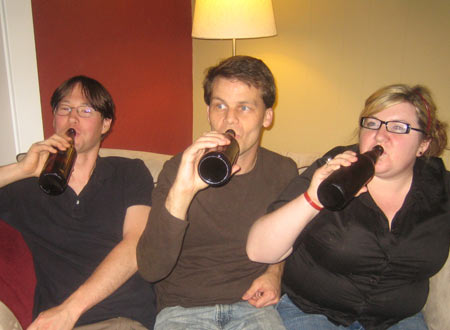
All that remained was to try the results. Would the beer taste alright, or was the last 1/3rd of a keg actually just backwash? The following weekend, I sat down with some friends for the taste test. |
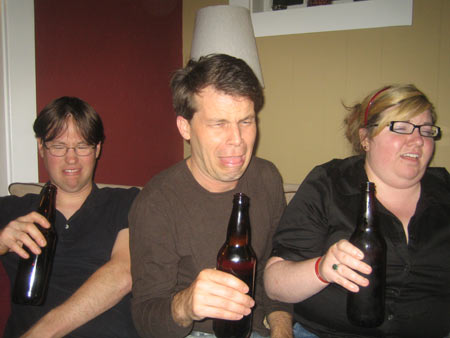
It was a leeettle flat. Ok. Totally flat. Bottling the beer hadn't saved the fizz. I guess the CO2 had escaped from the leftover beer either in the keg or during the foam show when I was bottling. The experiment was a bust, but I'm not giving up. Next time I'm just going to get a keg of Cognac. |
page 1 | 2 | 3
contact Rob | how much is inside a
keg | height weight chart |
how much is inside goldschlager |
backwash | breathalyzer
testing
science club | pranks |
How much is inside? |
Home |
Incredible Stuff I Made | Breath
Testing from the National Library of Medicine Web site
May 11, 2007.